
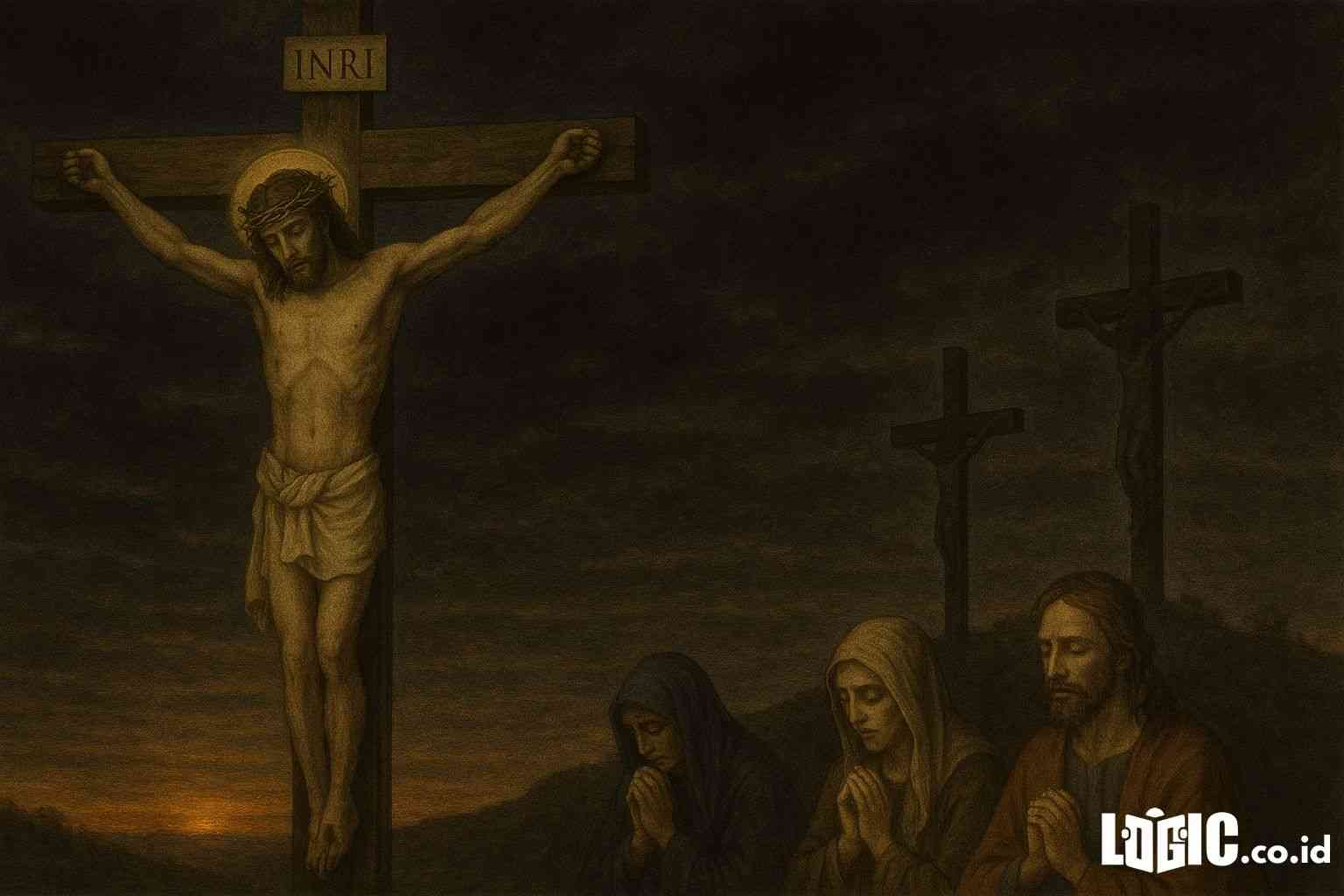
LOGIC.co.id - Good Friday is a significant Christian holiday commemorating the crucifixion and death of Jesus Christ. Observed during Holy Week, it holds profound spiritual importance for Christians worldwide. This article explores the meaning, historical significance, and modern-day observance of Good Friday, providing a comprehensive guide for those seeking to understand this solemn day.
What is Good Friday?
Good Friday is the day when Christians remember the sacrifice of Jesus Christ on the cross, an event central to Christian theology. According to the Bible, Jesus was crucified in Jerusalem, bearing the sins of humanity to offer salvation. The term "Good" reflects the redemptive nature of His sacrifice, despite the somber events of the day.
This day falls on the Friday before Easter Sunday, typically in March or April, depending on the lunar calendar. It is part of Holy Week, which includes Palm Sunday, Maundy Thursday, and Easter.
Historical and Biblical Significance
The events of Good Friday are rooted in the New Testament. After being betrayed by Judas Iscariot, Jesus was arrested, tried, and sentenced to death by crucifixion under Roman governor Pontius Pilate. The crucifixion, as described in the Gospels, is seen as the fulfillment of Old Testament prophecies about the Messiah.
Good Friday underscores themes of sacrifice, forgiveness, and redemption. Christians believe that Jesus’ death atoned for humanity’s sins, paving the way for reconciliation with God. The day is marked by reflection on these themes, often through prayer and fasting.
How is Good Friday Observed?
Good Friday is observed with solemnity and reverence. Common practices include:
- Church Services: Many churches hold special services, such as the Stations of the Cross, which recount the events leading to Jesus’ crucifixion. Some denominations conduct a three-hour service from noon to 3 p.m., symbolizing the time Jesus hung on the cross.
- Fasting and Abstinence: Christians may fast or abstain from meat as a form of penance and spiritual discipline.
- Silent Reflection: The day is often marked by quiet contemplation, with some churches removing decorations or covering crosses to emphasize mourning.
- Veneration of the Cross: In Catholic and some Protestant traditions, believers honor the cross as a symbol of Christ’s sacrifice.
In many countries, Good Friday is a public holiday, with businesses and schools closed. For example, in the Philippines, elaborate processions and reenactments of the Passion of Christ draw thousands of participants.
Cultural Variations in Good Friday Observance
Good Friday is observed differently across cultures:
- Philippines: Known for its deep Catholic heritage, the country hosts dramatic rituals, including flagellation and, in some areas, actual crucifixions (though rare and controversial).
- Spain: Cities like Seville hold grand processions with ornate floats depicting scenes from the Passion.
- Latin America: Many countries feature street processions, with participants carrying crosses or statues of Jesus and Mary.
- Western Countries: Observance is generally more subdued, focusing on church services and personal reflection.
Why is Good Friday Relevant Today?
Good Friday remains relevant as a time for spiritual renewal and introspection. It encourages believers to reflect on themes of sacrifice, forgiveness, and hope, which resonate beyond religious boundaries. In a fast-paced world, the day offers an opportunity to pause and contemplate life’s deeper meaning.
For non-Christians, understanding Good Friday fosters cultural awareness and respect for diverse traditions. Its message of selflessness and redemption continues to inspire people globally.
Good Friday and Easter: The Connection
Good Friday is inseparable from Easter Sunday, which celebrates Jesus’ resurrection. Together, they form the cornerstone of the Christian faith, symbolizing death and rebirth. While Good Friday is somber, it carries the promise of hope, as Easter signifies victory over death.
Conclusion
Good Friday is a day of profound significance, inviting Christians and others to reflect on sacrifice, redemption, and hope. Whether through attending church services, fasting, or learning about its history, observing Good Friday deepens one’s understanding of Christian faith and its global impact. As part of Holy Week, it sets the stage for the joy of Easter, making it a pivotal moment in the Christian calendar.