
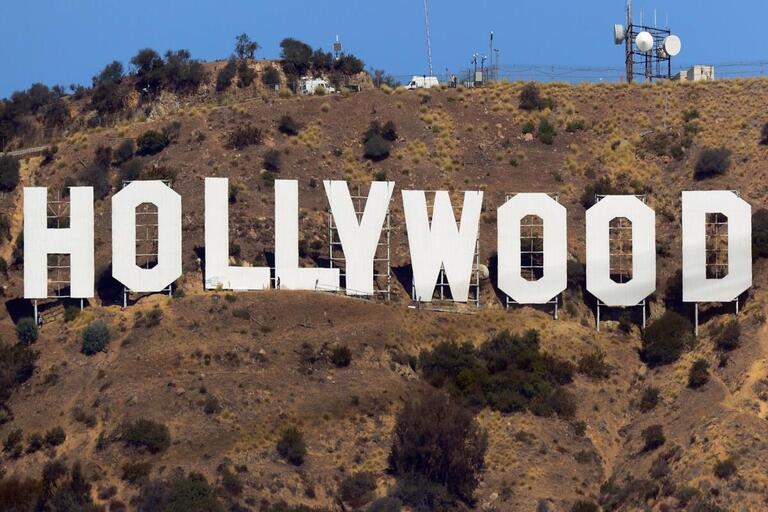
Washington, LOGIC.co.id – U.S. President Donald Trump has once again stirred controversy by announcing a 100% import tariff on all films produced outside the United States. The decision comes as Trump claims that the American film industry is facing “a very rapid death” due to growing incentives from foreign countries successfully attracting international filmmakers.
“The world is carrying out a coordinated effort to weaken Hollywood, and this is a threat to our national security. It’s also about messaging and propaganda,” Trump wrote on his social media platform, Truth Social.
This move follows Trump’s earlier decision in January to appoint three prominent figures in the film industry—Jon Voight, Sylvester Stallone, and Mel Gibson—to revive Hollywood and make it “bigger, better, and stronger than ever.”
Film Productions Fleeing Hollywood
For years, U.S. film and television productions have shifted to countries offering more attractive tax incentives, such as Canada, the United Kingdom, and Australia. These nations provide tax credits and cash rebates to lure productions and secure a share of the projected $248 billion global content creation market by 2025, according to Ampere Analysis.
Major media companies like Walt Disney, Netflix, and Universal Pictures are known to frequently shoot overseas. Several Marvel superhero films have been produced in Australia, while New Zealand served as the filming location for the iconic "The Lord of the Rings" trilogy.
In response to Trump’s policy, leaders in Australia and New Zealand expressed strong support for their local film industries, which are now highly sought after by global production houses.
U.S. Film Industry Under Pressure
According to data from ProdPro, around 50% of the money spent by U.S. film and TV producers in 2023 on projects with budgets over $40 million was allocated to productions outside the country. FilmLA, a nonprofit that monitors production activity in the Los Angeles area, reported that production volume in the city has dropped nearly 40% over the past decade.
The devastating wildfires in January have further fueled concerns that film crews—from camera operators to sound engineers—may abandon Los Angeles in search of more stable and affordable work environments.
A ProdPro survey of industry executives revealed that California ranked only sixth as a preferred production location for the next two years, behind places like Toronto, the U.K., Vancouver, Central Europe, and Australia.
In response, Hollywood producers and film industry unions have been urging California Governor Gavin Newsom to increase the state’s tax incentives to help maintain competitiveness with foreign filming locations.
Global Retaliation Looms
Trump’s film tariff policy is viewed as an extension of his earlier controversial trade measures that once shook markets and sparked fears of a recession. William Reinsch, a former senior official at the Department of Commerce and now a fellow at the Center for Strategic and International Studies, warned that the move could backfire on the U.S. film industry.
“Retaliation from other countries could be devastating for our industry. We stand to lose more than we gain from this policy,” Reinsch said. He also noted that it’s difficult to justify the move under national security or emergency grounds in the context of film.