
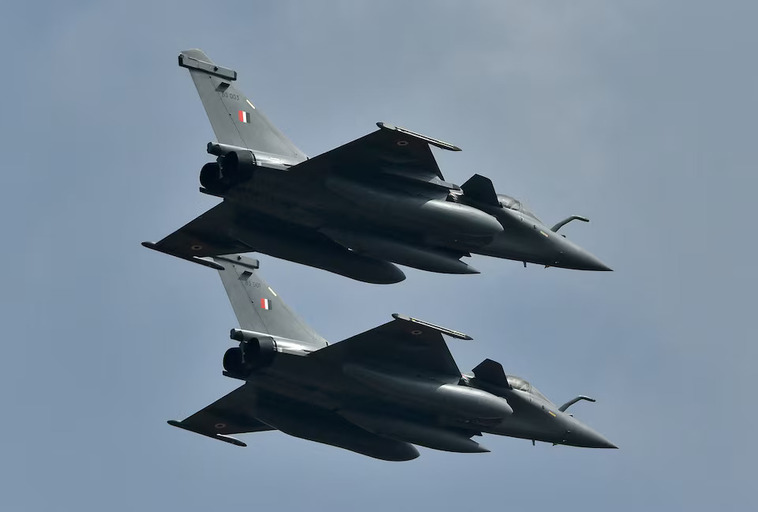
Islamabad, New Delhi, LOGIC.co.id – Tensions between India and Pakistan have once again flared as both nuclear-armed nations continue to bolster their military capabilities following their last major clash in 2019. Military analysts warn that this buildup could increase the risk of escalation—even in a limited conflict scenario.
Pakistan has accused India of planning a retaliatory military strike in response to a recent attack on domestic tourists in Indian-administered Kashmir. Indian Prime Minister Narendra Modi vowed to punish those behind the attack “beyond their imagination.”
Pakistan, meanwhile, has denied any involvement and warned that it would retaliate if attacked.
In 2019, India launched airstrikes inside Pakistani territory following a suicide bombing on a military convoy in Kashmir. Pakistan responded with its own airstrikes and shot down an Indian fighter jet during a two-day confrontation.
High-Risk Conflict Potential
Kashmir remains one of the most dangerous flashpoints in the world. While the use of nuclear weapons is considered unlikely except in extreme circumstances, experts caution that even a limited conflict could rapidly spiral into something much more serious.
“Decision-makers in both countries now show a higher tolerance for risk compared to pre-2019 levels,” said Frank O’Donnell of the Stimson Center. “But without a clear understanding of the red lines, unintended escalation is a real possibility.”
Advanced Weapons and New Technologies
Since 2019, both nations have acquired cutting-edge military equipment:
- India now operates 36 French-made Rafale fighter jets equipped with Meteor air-to-air missiles. It has also deployed Russian-made S-400 air defense systems to strengthen regional security.
- Pakistan has received Chinese J-10 fighter jets since 2022, armed with PL-15 missiles, and has also acquired HQ-9 air defense systems from China.
“There’s public pressure to act,” said Anil Golani, a retired officer of the Indian Air Force. “But personally, I believe neither country wants a full-scale war.”
Role of Drones and Missiles
Rather than conventional aerial dogfights, drone strikes or short-range missile attacks are considered more likely due to the risks associated with losing pilots.
India has procured Heron Mark 2 drones from Israel and has placed orders for U.S.-made Predator drones. Pakistan, meanwhile, relies on Bayraktar TB2 and Akinci drones from Turkey.
Last Saturday, Pakistan conducted a test launch of a medium-range ballistic missile with a 450 km range, demonstrating its readiness. India has yet to respond, but it possesses BrahMos cruise missiles and the Agni missile series, which have intercontinental capabilities.
Global Stakes and Possible Interventions
Any conflict between India and Pakistan would have repercussions beyond the region, potentially drawing in global powers—especially China and the United States. China is a close ally of Pakistan and a major arms supplier, while the U.S. has been strengthening ties with India in recent years.
Kaiser Tufail, a former Pakistani fighter pilot, warned that India may seek to project greater force this time to deter further aggression—but that approach carries heightened risks.
“If it goes beyond what happened in 2019, it could be extremely dangerous,” he said. “A battle between two nuclear-armed nations is a deeply alarming scenario.”