
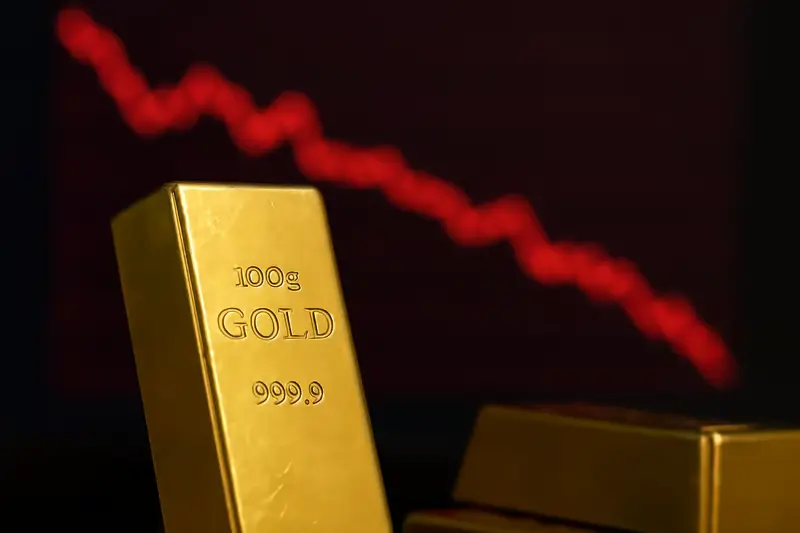
LOGIC.co.id – Global gold prices came under pressure once again, driven by easing trade tensions between the United States (US) and China, as well as a strengthening US dollar index. This week, gold prices are expected to face several major challenges.
As of Monday morning (April 28, 2025) at 06:08 AM Western Indonesia Time (WIB), spot gold prices had weakened by 0.07% to US$3,315.20 per troy ounce. Previously, on Friday’s trading session (April 25, 2025), gold prices also fell by 0.90% to US$3,318.20 per troy ounce.
Global Gold Price Movements
The decline occurred alongside the strengthening of the US dollar and signs of easing trade tensions after reports emerged that Beijing had exempted certain US products from import tariffs. This policy weighed on gold prices, which are typically seen as a safe-haven asset during geopolitical uncertainty.
"China’s tariff reductions have had a negative impact on gold prices, but there has not been any major liquidation yet," said Daniel Ghali, a commodity strategist at TD Securities, as quoted by Reuters.
Ghali also added that market players remain active in buying gold during price dips, suggesting that there is still potential for a rebound.
China is reportedly considering exempting certain US imports from tariffs by up to 125%. Local authorities have asked businesses to identify qualifying products.
Meanwhile, US President Donald Trump hinted at efforts to de-escalate the trade war this week, stating that direct talks between the two countries are ongoing.
On the other hand, the US dollar index strengthened by 0.22% to 99.69 in morning trading. A stronger dollar makes gold, which is priced in dollars, more expensive for international buyers.
Earlier this year, gold had reached an all-time high of US$3,500.05 per troy ounce, posting a gain of over 25% throughout 2025. The rally was fueled by geopolitical tensions—particularly the US-China trade war—and robust central bank demand for gold.
"Trade tensions were indeed the main driver behind the earlier surge in gold prices. However, even with signs of improvement, those concerns have not completely disappeared," said Fawad Razaqzada, a market analyst at City Index and FOREX.com.
Major Challenges for Gold Prices This Week
This week will be critical for gold price movements, with several key US economic data releases, including:
1. March PCE Price Index (Wednesday, April 30, 2025):
The Fed’s preferred inflation gauge. Latest projections forecast annual PCE inflation rising to 2.5%, potentially prompting the central bank to keep interest rates higher for longer.
2. JOLTs Job Openings and Consumer Confidence Reports (Tuesday, April 29, 2025):
These will measure the strength of the US labor market and consumer confidence.
3. Q1 2025 GDP Growth Estimate:
Growth is projected at just 0.4% annually, sharply down from 2.4% in the previous quarter, reflecting the impact of tight monetary policy.
4. US Employment Report:
An estimated 130,000 jobs are expected to have been added in April, lower than the previous month’s figure.
If data show inflation easing and the labor market weakening, gold could gain support. Weakening economic data could prompt the Fed to cut interest rates sooner. Conversely, persistently high inflation could lead the Fed to delay rate cuts.
Interest rates have a significant impact on gold. Lower rates tend to weaken the US dollar and reduce yields on US Treasury bonds, making gold—which offers no yield—more attractive to investors.
Asia Focus: China’s PMI Data in the Spotlight
In Asia, market attention is focused on the release of China’s official NBS Manufacturing PMI and Caixin Manufacturing PMI data for April, scheduled for April 30, 2025.
- The NBS Manufacturing PMI is expected to remain in slight expansion territory at 50.5.
- The Caixin Manufacturing PMI is forecasted at 51.2.
These figures serve as key indicators for assessing the health of China’s manufacturing sector amid aggressive fiscal and monetary stimulus efforts. Stronger data could boost sentiment across Asian markets, while weaker data could raise concerns about the global economic outlook.